
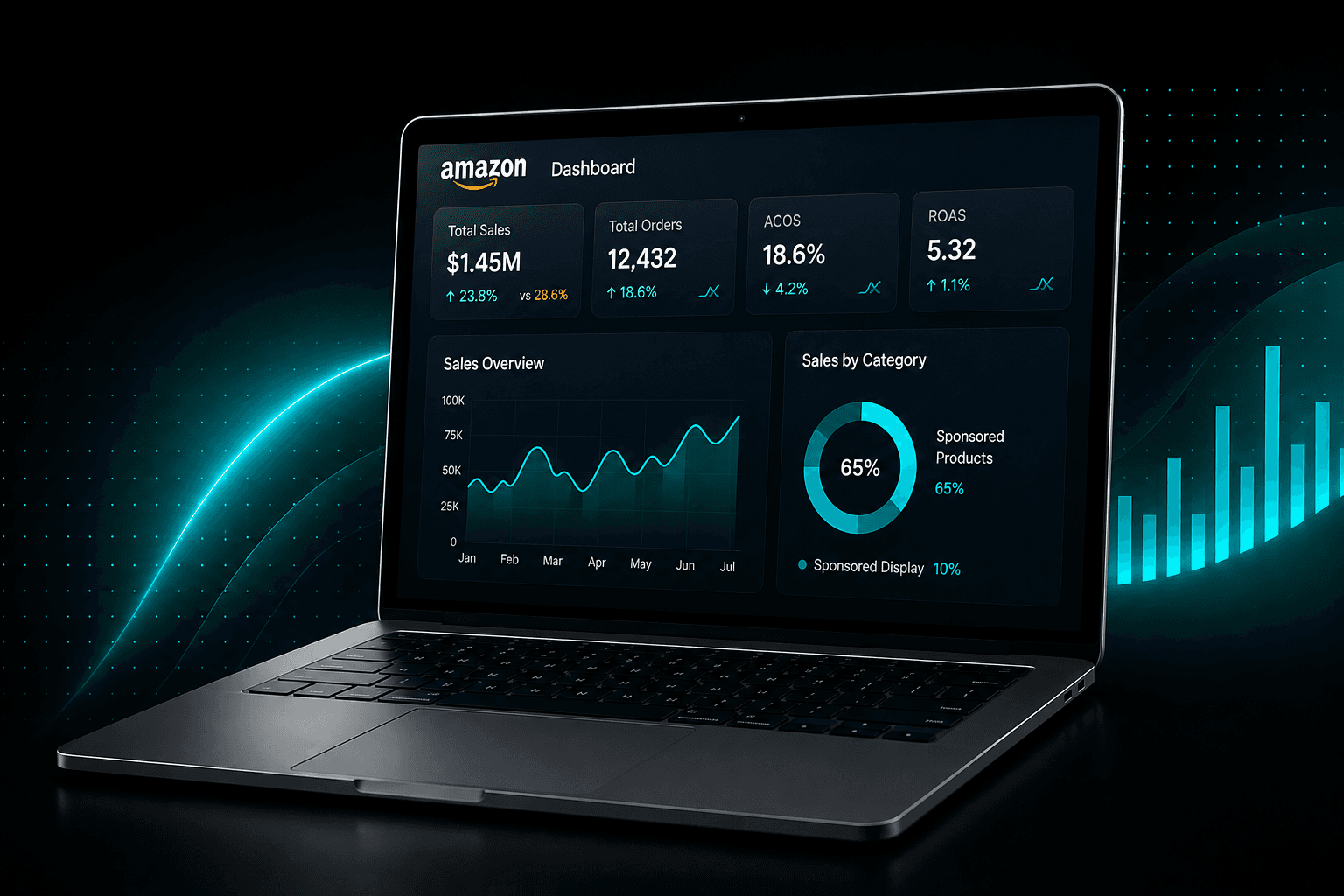

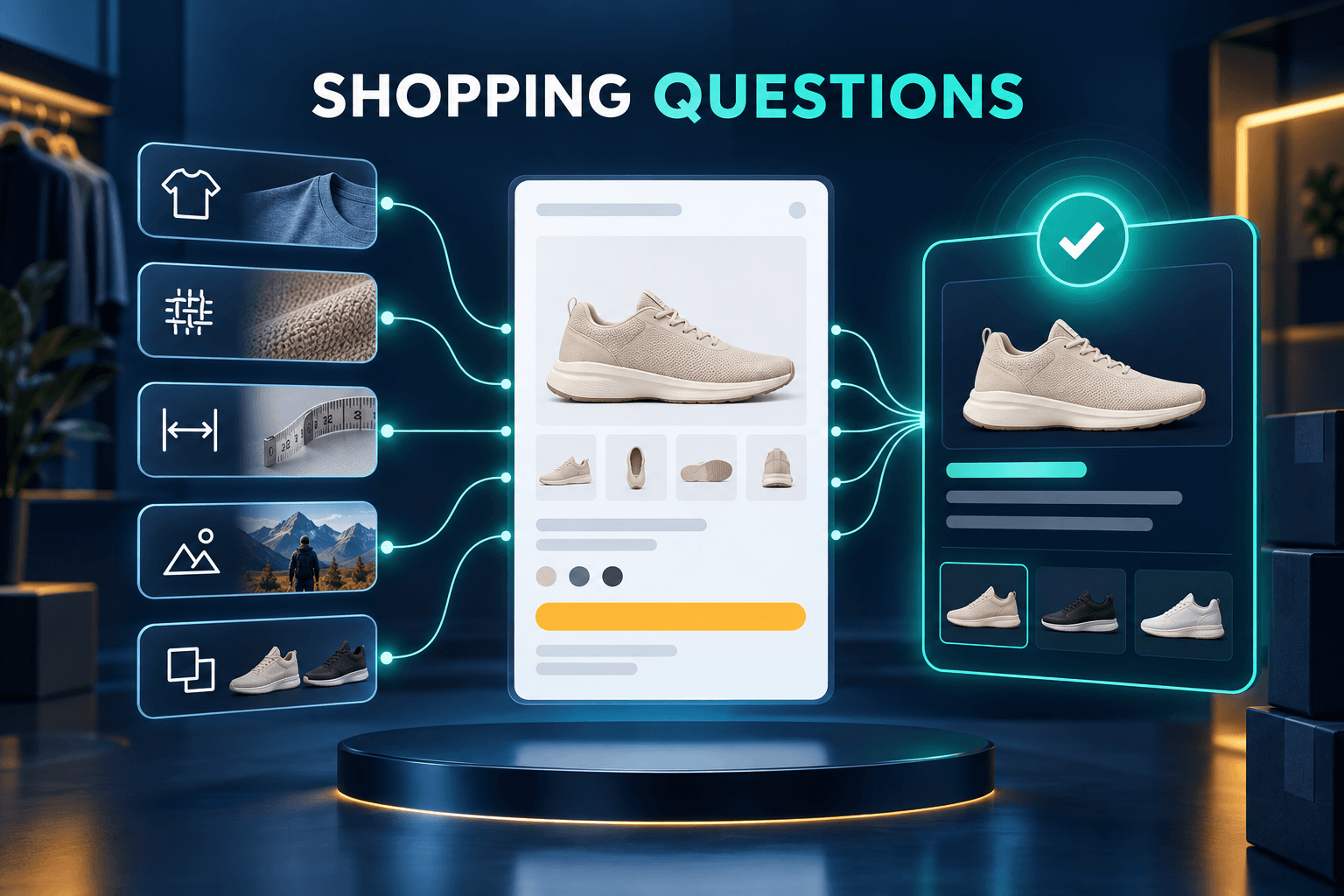
Amazon renamed Rufus to Alexa for Shopping in May 2026. The name changed, but the optimization problem became clearer: customers can ask full questions, compare products, research use cases, and evaluate attributes without relying only on short keyword searches.
Amazon says its shopping assistant draws on product catalog information, customer reviews, community Q&A, shopping activity, and information from across the web. It can answer specific product questions and generate comparisons. Brands therefore need listings that state important facts clearly and consistently.
Pro Tip:
This is not a reason to abandon conventional Amazon SEO. Search terms, relevance, click-through rate, and conversion still matter. The practical change is to expand optimization from keyword inclusion to question coverage and attribute clarity.
1. Build a customer question map
Export or collect questions from customer messages, reviews, returns, competitor listings, PPC search terms, and category research. Group them by decision type:
- Fit and compatibility.
- Material or ingredients.
- Dimensions and capacity.
- Use case and skill level.
- Care, storage, or installation.
- Performance limits.
- Comparison with common alternatives.
Prioritize questions that appear frequently or block a purchase. If shoppers repeatedly ask whether a tool works with a specific vehicle type, the answer should not be buried in image seven or implied through vague wording.
2. Place factual answers in the catalog
Use the title for the product identity and the most important differentiating attributes. Use bullets for specific benefits supported by product facts. Use images for scale, compatibility, steps, and comparisons. Use A+ Content for deeper education and product-family navigation.
Consistency matters. A listing should not show one capacity in the bullets and another in an image. Variation names should follow the same format. Units should be clear. Avoid unsupported superlatives such as “best,” “ultimate,” or “professional grade” unless the claim can be substantiated and complies with Amazon policy.
For a 24-ounce insulated bottle, useful language covers the actual questions: dimensions, material, lid type, cup-holder fit, dishwasher guidance, temperature-retention claim with a supported basis, and included components. Repeating “insulated water bottle” across every field adds less customer value.
3. Test conversational discovery manually
Create a fixed question set for the category, then run the same questions periodically in Alexa for Shopping. Examples include:
- Which option is suitable for a beginner?
- Will this fit a specific model or space?
- What is the difference between this product and the common alternative?
- Which product meets a defined material, size, or care requirement?
Record whether the ASIN appears, how it is described, and which competitors appear beside it. Results can vary by customer context and change over time, so this is directional monitoring rather than a ranking report.
4. Measure business outcomes
Track search impression share, click share, conversion rate, organic rank for priority queries, and the frequency of customer questions or returns tied to missing information. When content changes, annotate the date and compare equivalent periods.
Key Benefit:
The best optimization work improves both machine-readable catalog clarity and human buying confidence. A listing that answers concrete questions accurately is better positioned for conversational discovery and usually easier for shoppers to evaluate on the product page.
5. Maintain an attribute control sheet
Create one approved source for dimensions, materials, compatibility, care instructions, included components, and performance claims. Compare that sheet with the title, bullets, images, A+ Content, variation names, and Brand Store copy each quarter.
Log any conflict and correct the highest-visibility field first. The control sheet reduces contradictory answers and gives creative, catalog, and advertising teams the same factual basis. It is especially valuable when several agencies, distributors, or internal teams can update content.
Sources: Amazon announcement introducing Rufus and Amazon announcement renaming it Alexa for Shopping